Sponsored Content · Paid Advertisement · Dietary Supplement · Not Medical Guidance
VI Vital InsightConsumer Health Education Product Details →

Published October 2026 · U.S. Adults

Understanding blood pressure, nitric oxide and the supplement market — a fact-checked consumer reference

This sponsored reference page reviews what controlled trials and institutional sources actually demonstrate about amino-acid compounds marketed for vascular health. Every claim is cited; every limitation is disclosed.

Disclosure: Flush Pril is classified as a dietary supplement. It is not a pharmaceutical product, is not intended to treat hypertension, and no measurable clinical outcome is implied anywhere on this page.

Fundamentals

Five principles every consumer should accept before evaluating any supplement

Rigorous thinking separates useful products from empty promises. These principles apply regardless of the brand.

An isolated number provides almost no diagnostic value. Healthcare providers consider patterns over time, measurement technique, personal history, and concurrent symptoms before drawing conclusions.

Clinicians rely on multiple readings captured under controlled conditions — accounting for time of day, posture, and recent activity — rather than a single snapshot.

Proper nutrition, physical activity, stress management, sleep, and an individualized care plan developed with a qualified provider remain the foundation. Supplements are additions, not replacements.

Flush Pril is not authorized to diagnose, treat, cure, or prevent any disease — including hypertension. The regulatory framework for dietary supplements differs fundamentally from that of prescription drugs.

Published findings about an isolated compound — at a specific dose, in a defined population, over a set duration — cannot be extrapolated to a different commercial formulation without independent testing.

Biology overview

How blood vessels regulate flow — endothelium and nitric oxide explained

Every blood vessel is lined with endothelial cells that participate in vascular signaling. Explaining this biology does not suggest any supplement can treat elevated blood pressure or replace prescribed therapy.

Endothelial cells serve as a signaling interface

These cells respond to shear stress, chemical signals, and oxygen levels in the bloodstream. This is well-established physiology — not proprietary knowledge tied to any single product.

Nitric oxide mediates vascular tone

NO is a signaling molecule that promotes smooth-muscle relaxation in vessel walls. It is one of the most extensively studied molecules in cardiovascular science — not a novel discovery or trade secret.

Every study has boundaries

Results depend on the exact compound tested, the dose administered, who participated, and how long the trial lasted. Generalizing across these boundaries is scientifically unsound.

EDUCATIONAL — NOT CLINICAL EVIDENCE Endothelial layer Blood flow → Vessel wall Simplified illustration — not evidence for any supplement effect.
Ingredient analysis

Examining the Flush Pril supplement facts panel

The label discloses a proprietary amino-acid blend weighing 500 mg total. How much of each individual ingredient that total contains is not specified by the manufacturer.

FLUSH PRIL — DIETARY SUPPLEMENT Proprietary Blend: 500 mg
#IngredientDetails
1 L-Arginine Alpha-Ketoglutarate (AAKG) A modified form of L-arginine investigated for its role in the nitric-oxide synthesis pathway. Individual quantity within the blend is not disclosed.[6]
2 L-Arginine HCl The hydrochloride salt of L-arginine. Shares the proprietary blend total with the other two compounds; its standalone dosage is unlisted.[6]
3 L-Citrulline dl-Malate A citrulline-malate compound. The body recycles L-citrulline into L-arginine. Also pooled into the same 500 mg blend figure.[7,8]
⚠ Note: 500 mg is the combined blend total — not 500 mg of each. Individual component weights are proprietary.
Other listed ingredients: Gelatin capsule · Rice flour · Magnesium stearate (processing agent, not a magnesium supplement)

What the label tells you

  • The three amino-acid compounds in the blend
  • The aggregate weight of the proprietary formula
  • Non-active ingredients used in capsule manufacturing

What it omits

  • Individual milligram quantities per ingredient
  • Clinical trial data specific to this formulation
  • Predicted outcomes for any given consumer
Critical reading

Five filters to apply before linking any study to a commercial product

Published research provides essential background — but its conclusions apply only within the exact parameters tested.

1

Compound form

Results for one molecular version of an ingredient may not carry over to a different form or mixture.

2

Dosage used

The amount tested in a clinical setting frequently exceeds what a consumer supplement provides.

3

Participant profile

Age, sex, health status, and baseline readings define who the findings apply to — not everyone.

4

Trial duration

Weeks-long and year-long studies address fundamentally different questions and are not interchangeable.

5

Endpoint measured

A biomarker shift in a lab does not automatically translate to a clinically meaningful personal benefit.

Awareness

Common foods, drinks and medications that can affect blood-pressure readings

Published research has identified multiple everyday items that may influence blood-pressure measurements. This information is for awareness — it is never a reason to stop any prescribed treatment.

Essential reminder: Never stop, change, or skip any medication prescribed by your doctor because of information on this page. Share any concerns directly with your healthcare provider.

Foods

High concern

Excessive sodium

A systematic review of 185 randomized trials (Huang et al., 2020) linked sodium reduction to lower systolic and diastolic pressure across diverse populations. The AHA recommends staying under 2,300 mg/day, ideally 1,500 mg.[9]

Common sources: processed meats, canned soups, frozen meals, restaurant food, bread, soy sauce, chips
High concern

Saturated and trans fats

The DASH trial (Appel et al., 1997) demonstrated that a diet emphasizing fruits, vegetables, whole grains, and low-fat dairy — while limiting saturated fat — produced meaningful blood-pressure improvements compared to a typical American diet.[10]

Common sources: fried food, fatty red meat, full-fat dairy, packaged baked goods, hydrogenated oils
Moderate concern

Added sugars and refined carbohydrates

DiNicolantonio & Lucan (2014) argued that added sugars — particularly fructose — may raise blood pressure independently of weight gain, and could be more significant than sodium in certain cases.[11]

Common sources: soft drinks, candy, pastries, white bread, sweetened cereals, fruit drinks
Moderate concern

Natural licorice (glycyrrhizin)

Consuming authentic licorice root — containing glycyrrhizin — has been associated with sodium retention, potassium loss, and elevated blood pressure. Penninkilampi et al. (2017) confirmed a dose-response relationship.[12]

Common sources: genuine licorice candy, licorice root tea, certain herbal products

Beverages

High concern

Heavy alcohol intake

Roerecke et al. (2017), reviewing 36 clinical trials, found that consuming more than 2 drinks per day raised blood pressure in a dose-dependent manner. Even moderate reduction among heavy drinkers improved readings.[13]

AHA guideline: ≤1 drink/day for women, ≤2/day for men
Moderate concern

Excessive caffeine

Mesas et al. (2011) reported in a meta-analysis that caffeine causes short-term blood-pressure spikes lasting 1–3 hours. Regular moderate intake (≤400 mg/day) shows less clear long-term impact, though sensitive individuals may respond more strongly.[14]

Common sources: coffee, energy drinks, pre-workouts, certain teas, caffeinated sodas
High concern

Sugar-sweetened drinks

A prospective study of 240,000+ adults (Cohen et al., 2012) associated sugar-sweetened beverage consumption with increased hypertension risk, independent of total calorie intake and body weight.[15]

Common sources: regular soda, sweetened iced tea, fruit punch, sugary energy drinks

Medications & OTC products

For educational awareness only. Never alter a prescription without consulting your physician.

Awareness

NSAIDs (ibuprofen, naproxen)

Johnson et al. (2005) found that NSAIDs can increase average blood pressure by approximately 5 mmHg and may blunt the effectiveness of antihypertensive medications.[16]

Products: Advil, Motrin, Aleve, generic ibuprofen/naproxen
Awareness

Oral decongestants

Pseudoephedrine and phenylephrine constrict blood vessels to relieve congestion — but this mechanism can also elevate blood pressure. The AHA recommends decongestant-free alternatives for hypertensive individuals.[17]

Products: Sudafed, multi-symptom cold medications, some nasal sprays
Awareness

SNRI antidepressants

Venlafaxine and duloxetine have been linked to dose-dependent blood-pressure increases. Licht et al. (2009) confirmed this association across multiple clinical trials.[18]

Products: Effexor (venlafaxine), Cymbalta (duloxetine) — discuss with your prescriber
Awareness

Estrogen-containing contraceptives

Certain women using estrogen-based birth control experience modest but measurable blood-pressure elevations. A Cochrane review (Dong et al., 2014) substantiated this effect, particularly with higher-estrogen formulations.[19]

Note: lower-dose options may have less impact — consult your prescriber

Key takeaway: A wide range of everyday substances can influence blood-pressure measurements. This listing is not exhaustive. Your physician is the appropriate person to assess your full dietary, medication, and lifestyle profile.

Context

The evidence-backed habits that matter most

Follow your medical plan

Continue prescribed medications, attend scheduled appointments, and complete any monitoring your clinician has ordered.

Get medical clearance for supplements

Discuss any dietary supplement with your doctor — especially if you take blood-pressure medication, blood thinners, or nitrates.

Eat for cardiovascular health

Diets centered on vegetables, fruit, whole grains, and minimally processed foods have consistent evidence. The DASH eating plan is one established framework.[4]

Track readings properly

If your provider recommends home monitoring, use a validated device and share any unusual readings promptly.[3]

Options

Flush Pril — Select a Package

All packages include free U.S. shipping and a 60-day money-back guarantee. Check the label and consult your doctor before ordering.

Best Value
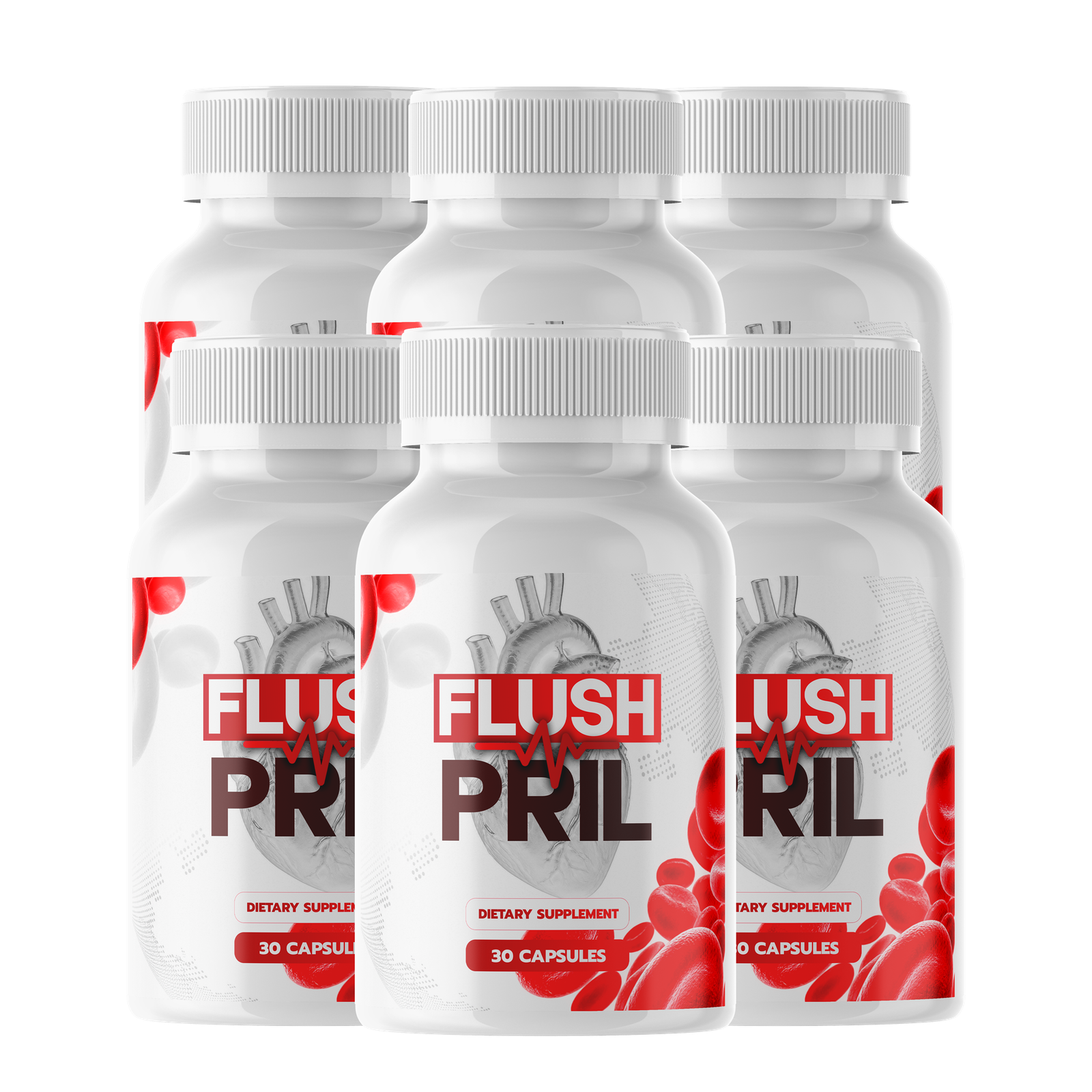
Flush Pril 6 Bottles

6 Bottles

180-Day Supply

$49/bottle

Total: $294 · Free Shipping

Select This Package → 60-Day Money-Back Guarantee
Most Popular
Flush Pril 3 Bottles

3 Bottles

90-Day Supply

$69/bottle

Total: $207 · Free Shipping

Select This Package → 60-Day Money-Back Guarantee
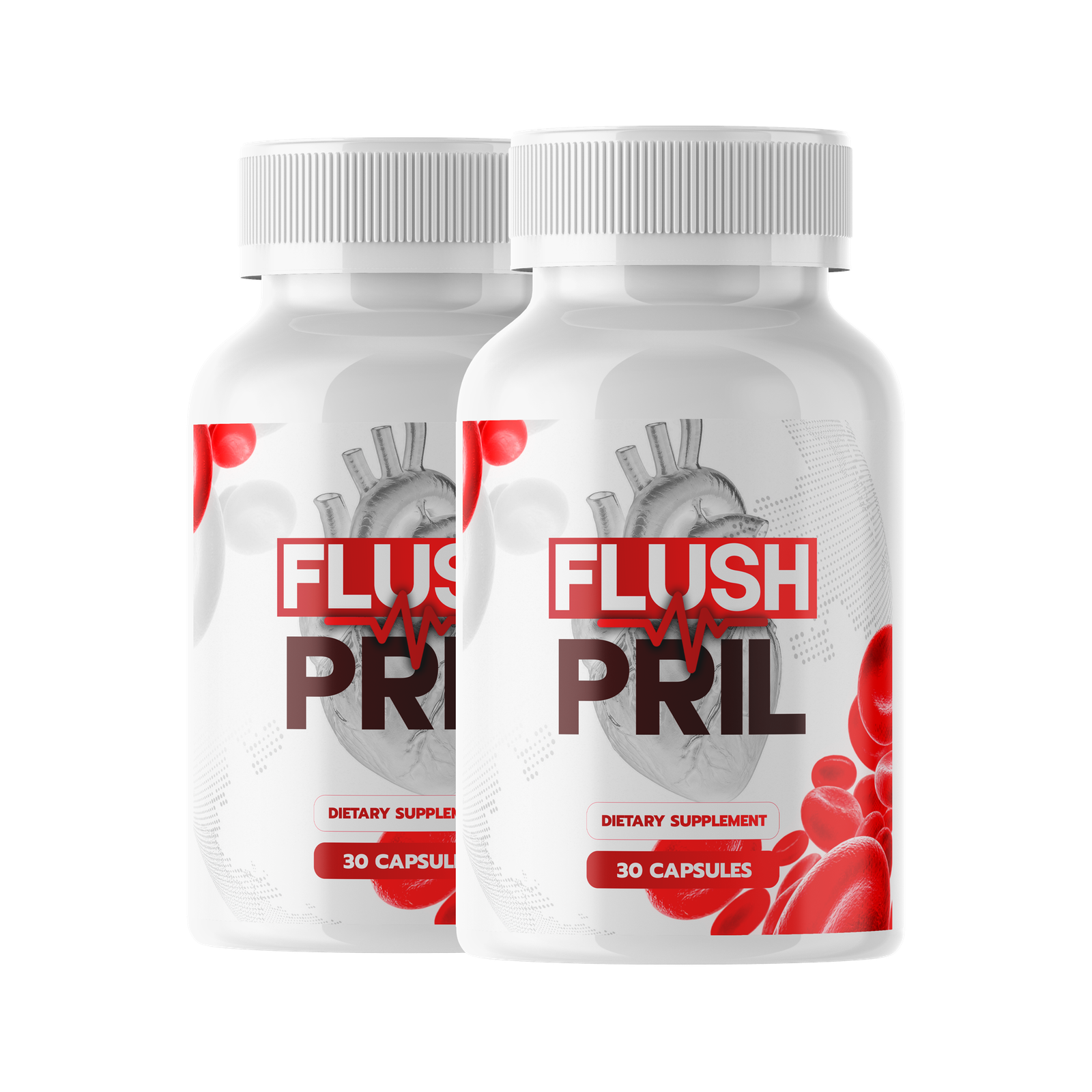
Flush Pril 2 Bottles

2 Bottles

60-Day Supply

$79/bottle

Total: $158 · Free Shipping

Select This Package → 60-Day Money-Back Guarantee

Flush Pril is a dietary supplement. It is not designed to diagnose, treat, cure, or prevent any disease. Individual results vary. Consult the product label before use. These statements have not been reviewed by the FDA.

Before you order

Base your decision on verified information and clear commercial terms — not urgency, anecdotes, or implied medical guarantees.

✓Review the complete Supplement Facts panel and directions on the product page.
✓Ask a qualified healthcare professional about suitability and possible interactions.
✓Confirm pricing, shipping, billing terms, and return policy before completing checkout.
✓Accept that no dietary supplement guarantees a specific medical outcome.
View the Best Value Package →

Dietary supplement · 18+ · No guaranteed medical result · Individual experience varies.

Questions

Straight answers — zero spin

No. Flush Pril is marketed as a dietary supplement. It is not a medication, and nothing on this page claims it diagnoses, treats, cures, or prevents any condition.

Never. Do not modify any prescription based on supplement advertising or any content published on this page. Only your doctor should make medication decisions.

No. The label lists a combined proprietary-blend weight of 500 mg. The individual quantities of AAKG, L-Arginine HCl, and L-Citrulline dl-Malate are not broken out.

Suitability depends on individual health status, current medications, age, and other personal factors. A qualified healthcare professional is the right person to evaluate whether it is appropriate for you.

No. Neither this page nor the manufacturer promises any particular reading, timeline, or clinical result. Individual responses to dietary supplements vary widely.

Citations

Scientific and institutional sources cited

These references support the educational content above. Citation does not imply endorsement of Flush Pril, this page, or the advertiser by any organization.

  1. [1] American Heart Association / ACC. 2025 Guideline for High Blood Pressure in Adults. View source
  2. [2] CDC. About High Blood Pressure. View source
  3. [3] AHA. Home Blood Pressure Monitoring. View source
  4. [4] NHLBI. DASH Eating Plan. View source
  5. [5] FDA. Structure/Function Claims. View source
  6. [6] Bode-Böger SM, et al. (2003) — Oral L-arginine and endothelial function in older adults. Vasc Med. PMID 14518608
  7. [7] Maharaj A, et al. (2022) — L-Citrulline, endothelial function, and blood pressure. Nutrients. PMID 36297080
  8. [8] Kang Y, et al. (2024) — L-Citrulline and arterial flow in hypertensive postmenopausal women. Nutrients. PMID 38931289
  9. [9] Huang L, et al. (2020) — Sodium reduction and blood pressure: systematic review of 185 trials. BMJ, 368:m315. PMID 32094151
  10. [10] Appel LJ, et al. (1997) — DASH: dietary patterns and blood pressure. N Engl J Med, 336(16):1117–1124. PMID 9099655
  11. [11] DiNicolantonio JJ, Lucan SC. (2014) — Sugar versus salt in hypertension. Open Heart, 1(1):e000167. PMID 25717381
  12. [12] Penninkilampi R, et al. (2017) — Licorice, hypertension and hypokalaemia. J Hum Hypertens, 31(11):699–707. PMID 28660885
  13. [13] Roerecke M, et al. (2017) — Alcohol reduction and blood pressure. Lancet Public Health, 2(2):e108–e120. PMID 29253389
  14. [14] Mesas AE, et al. (2011) — Coffee and blood pressure in hypertensives. Am J Clin Nutr, 94(4):1113–1126. PMID 21880846
  15. [15] Cohen L, et al. (2012) — Sweetened beverages and incident hypertension. J Gen Intern Med, 27(9):1127–1134. PMID 22539069
  16. [16] Johnson AG, et al. (2005) — NSAIDs and blood pressure: a meta-analysis. Ann Intern Med, 121(4):289–300. PMID 8037411
  17. [17] AHA. OTC Medications and High Blood Pressure. View source
  18. [18] Licht CMM, et al. (2009) — Depression, heart-rate variability, and SNRIs. Arch Gen Psychiatry, 66(11):1181–1188. PMID 19884606
  19. [19] Dong W, et al. (2014) — Oral contraceptives and blood pressure. Cochrane Database Syst Rev. PMID 24477630
Research on a single ingredient, dosage, or population cannot serve as clinical validation for the Flush Pril formulation or as a guarantee of individual results.

FDA Statement: These statements have not been evaluated by the Food and Drug Administration. This product is not intended to diagnose, treat, cure, or prevent any disease.

Emergency: If you experience chest pain, severe breathlessness, fainting, sudden weakness or numbness, speech difficulty, an intense sudden headache, or any other potential medical emergency, call 911 immediately.